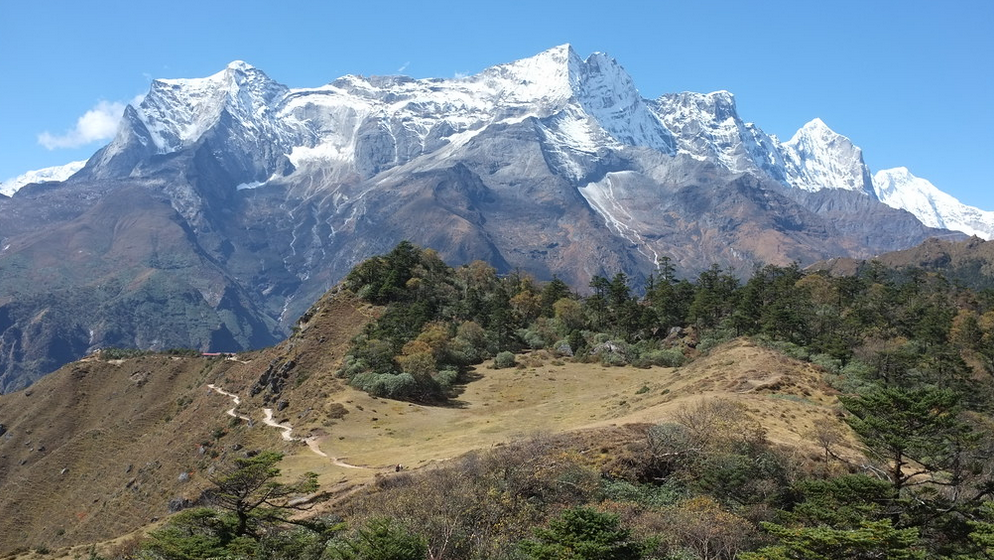
Trekking to Everest Base Camp is a dream for many travelers. The path cuts across rugged valleys, ancient monasteries, and mountainous terrain with towering Himalayan mountains. However, since the scenery is not forgettable, there is an issue that every trekker should not ignore, that is, altitude sickness.
Altitude sickness during the EBC Trek is not an altitude sickness condition that occurs only to beginners. It can be difficult even for those who are more experienced in trekking. The taller the height, the more your body is stretched out of its comfort zone. The guide is elaborated to explain how altitude sickness operates, why it happens, and most importantly, how to avoid it.
What Happens to Your Body at High Altitude
The oxygen in the air is reduced as you climb up in the Himalayas. Although the proportion of oxygen is constant, the air pressure decreases, and it is more difficult to get oxygen into your body effectively.
Your trek normally starts with a flight to Lukla at 2,860 meters (9,383 ft). From there, you gradually move upward through key stops like Phakding at 2,610 meters (8,563 ft), Namche Bazaar at 3,440 meters (11,286 ft), Tengboche at 3,860 meters (12,664 ft), Dingboche at 4,410 meters (14,468 ft), and Lobuche at 4,940 meters (16,207 ft). You finally arrive at the Everest Base Camp, 5,364 meters (17,598 ft).
When this happens at elevations, your body will react to this by accelerating the rate of breathing, heart rate, and production of red blood cells. Nevertheless, such changes are time-consuming. When you climb too fast, it is very possible that you will be affected by altitude sickness on the EBC Trek.
Understanding Altitude Sickness in Detail
Medically referred to as Altitude sickness or Acute Mountain Sickness, this condition typically starts to manifest itself at above 2,500 meters (8,202 ft). It is a result of your body becoming unable to cope with low oxygen levels.
Altitude illness can take place in three principal forms. The mild AMS is the most prevalent and is painful but can be handled. More severe types are the High-Altitude Pulmonary Edema, where the lungs are filled with fluid, and High-Altitude Cerebral Edema, swelling of the brain.
The problem of altitude sickness during the 14 days EBC Trek may rapidly escalate. A headache begins as a minor issue, but within a short period of time, it turns into a serious issue.
Detailed Symptoms and How They Progress
In the initial phases, the symptoms can resemble fatigue or dehydration. You may develop a headache, mild dizziness, nausea or loss of appetite. These manifestations are frequently seen in and around Namche Bazaar, at 3,440 meters (11,286 ft), where a number of trekkers have their first acclimatization day.
Towards higher elevations such as Dingboche 4,410 meters (14,468 ft), the symptoms may become more severe. Sleep disorders are common, and you might experience excessive sleepiness despite sleeping. The breathing can be heavier, particularly at night.
Severe headaches, confusion, inability to walk straight and difficulty in breathing even when resting are warning signs of severe cases of the condition. These symptoms signify severe illnesses such as HAPE or HACE and should be addressed immediately.
These stages are critical in the management of altitude sickness in the EBC Trek.
Acclimatization: The Foundation of Prevention
The most important factor to prevent altitude sickness is acclimatization. It enables your body to slowly adapt to low oxygen levels.
Most typical itineraries have rest days at Namche Bazaar at 3,440 meters (11,286 ft) and Dingboche at 4,410 meters (14,468 ft). These are not just rest days but active acclimatization days. Trekkers frequently climb to greater heights, such as the Everest View Hotel at 3,880 meters (12,730 ft) and back to bed at a lower level.
This is done to enable your body to adapt more effectively. One of the largest causes of altitude sickness on the EBC Trek is skipping acclimatization days.
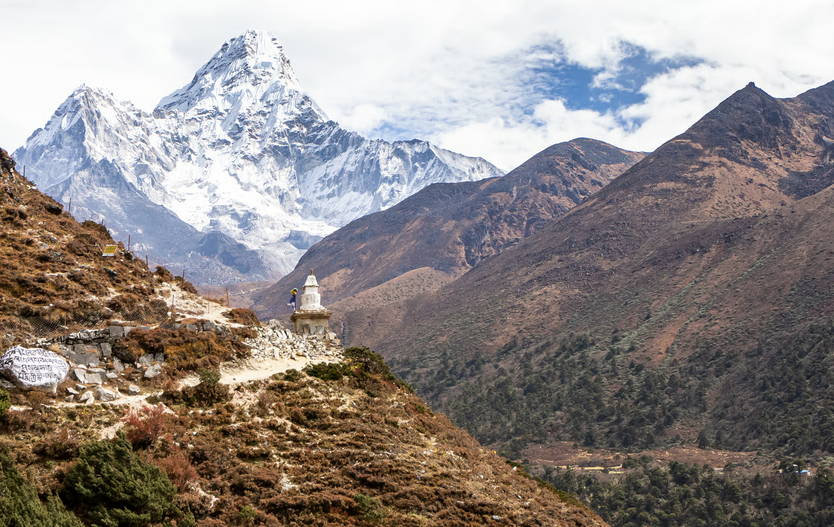
The Science of “Climb High, Sleep Low”
The principle of “climb high, sleep low” is widely used in high-altitude trekking. It is about uphill in the daytime and downhill at night to sleep.
As an illustration, when you are staying in Dingboche at 4,410 meters (14,468 ft), you would go to Nagarjun Hill, approximately 5,000 meters (16,404 ft), and back to Dingboche to sleep. It does not overload your body with excessive strain, yet this higher altitude exposure triggers your body in its adaptation process.
This plan helps greatly to minimize the chances of altitude sickness on the EBC Trek and enhances your overall performance on the trek.
Hydration, Diet, and Energy Management
Water is very important in avoiding altitude sicknessYou lose more water when you breathe in dry air in high altitudes. Acclimatization may be slowed and symptoms worsened by dehydration.
It is highly advisable to drink 3-4 liters of water per day. Warm drinks, herbal teas and soups are all good options during cold weather.
Food is also crucial. The high-carbohydrate food is easier to utilize at high altitudes because it gives energy. A typical Nepali meal, Dal Bhat, is a popular meal taken during the trek due to its balanced nutrient and energy value.
Although you are not hungry, the regular meal schedules will allow your body to adjust to the altitude sickness more easily during the EBC Trek.
Fitness vs Altitude: A Common Misconception
Most individuals assume that physical fitness helps them to avoid altitude sickness. Fitness can aid in endurance; nevertheless, it does not eliminate altitude sickness.
Indeed, highly fit persons occasionally climb too fast due to their strength, and this makes them more vulnerable. The EBC Trek is not a measure of strength but the way your body gets used to the oxygen levels, which causes altitude sickness. The trick is to take your time, no matter how fit you are.
Medications and Safety Measures
There are trekkers who take Acetazolamide to enhance acclimatization. This medicine assists your body to adapt more quickly by enhancing the effectiveness of breathing.
Nevertheless, it must not be regarded as a substitute for the correct acclimatization but rather a supplement. It is always advisable to consult the doctor before your trek.
Other precautions would be to avoid alcohol and smoking, particularly beyond Namche Bazaar at 3,440 meters (11,286 ft). These may disrupt the uptake of oxygen and exacerbate symptoms.
Importance of Proper Itinerary Planning
One of the best preventions of altitude sickness is a well-planned itinerary. Normal EBC treks are 12-14 days long, and a steady climb can be made.
It is even more dangerous to hurry the trek by reducing the number of days in the itinerary. To take an example, excessive speed of transit between Namche Bazaar (3,440 meters, 11,286 ft) and Lobuche (4,940 meters, 16,207 ft) without acclimatization may cause severe symptoms.
To reduce the occurrence of altitude sickness during the EBC Trek, it is important to select a good trekking plan.
Emergency Response and Descent Strategy
In case of worsening of the symptoms, despite rest and hydration, one should go down at a moment’s notice. It can be improved significantly, even just by 300 to 500 meters (984 to 1,640 ft).
In extreme instances, trekkers might need oxygen or evacuation. The Everest region has helicopter evacuation, which may be costly, and that is why it is highly advisable to have travel insurance.
The golden rule is simple: never ascend with symptoms. This is one of the most important rules to prevent hazardous situations connected with altitude sickness during the EBC Trek.
Mental Preparation and Awareness
The high-altitude trekking involves mental strength. It may be a physically taxing and mentally straining journey when discomfort is experienced due to altitude.
Remaining positive, tolerant, and in touch with your body cues can assist you in making more effective choices. Trekking is not a competition. Slow down your pace and you have higher chances of success.
Being aware of altitude sickness on the EBC Trek at the outset will provide you with confidence and ensure that you react positively should the sickness prevail.
Final Thoughts: Trek Smart, Stay Safe
It is a great feat to get to Everest Base Camp at 5,364 meters (17,598 ft), but your safety must be the priority. The risk of altitude sickness is real, yet it could be managed through the right knowledge and plan.
The pillars of prevention are a gradual climb, adequate acclimatization, hydration and listening to your body. By planning and being conscious, you can significantly minimize the risks of developing serious altitude problems.
The altitude sickness on the EBC Trek should not prevent you from reaching your goal. The preparation is the key to having a wonderful experience with every step of this journey and coming back with lifelong memories.